
Money Questions Answered: 9 Popular Searches Explained
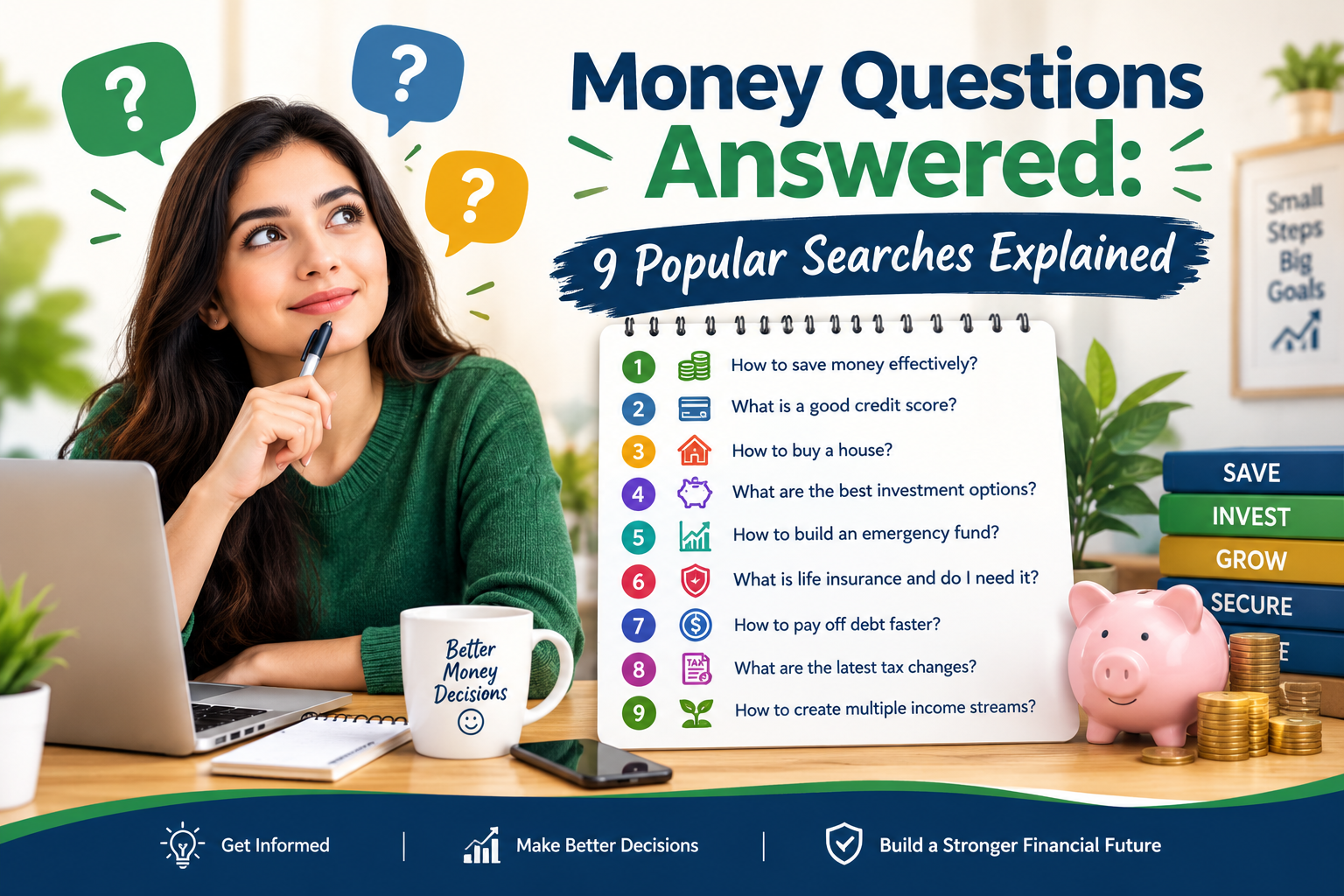
People search for money questions all day: how to earn more, how long savings will last, what a financial term means, even why the signature on a dollar bill is in the news. This guide answers nine of the most common ones in plain language, using official sources where facts matter, and points you to the right next step for each.
Quick answer: Most of these questions come down to the same habits: earn honestly, know what a product really costs, check numbers with an official calculator, and rely on government or primary sources for facts. Use the table below to jump to your question.
| Question | Short answer |
|---|---|
| Make money from home | Start with a skill you have, avoid anyone who asks you to pay for a job |
| Make money as a kid | Under 14, informal jobs; at 14-15, strict federal hour and job limits |
| HVAC / heating and air conditioning business | Plan, then check federal, state and local licensing before you start |
| Free money apps | Many charge fees or ask for tips; read the cost first |
| Money in retirement | Savings divided by yearly spending gap is a starting point; use official calculators |
| Money laundering | Hiding the illegal origin of money so it looks legitimate |
| US money | Federal Reserve Notes from $1 to $100 are printed today |
| Money yoga | Using mindfulness to handle spending and budgeting |
| Trump signature on money | Treasury announced plans in March 2026; timing is not confirmed in the sources I checked |
How Do You Make Money From Home?
The safest route is to turn a skill you already have (writing, design, tutoring, bookkeeping, admin work) into paid projects, using well-known platforms or people you know. The Federal Trade Commission (FTC) warns that scammers advertise fake jobs the same way honest employers do, and that real employers do not ask you to pay to get a job. It also says that an offer of big money for little work in a short time is almost certainly a scam, and that reshipping packages is never a real job.
Before accepting any offer, search the company name with words like “scam” or “complaint.” If a “client” sends you a check and asks you to return part of it, walk away. For a step-by-step plan, read our side hustles for beginners guide.
How Can You Make Money as a Kid?
Rules depend on age. According to the U.S. Department of Labor, the general minimum age for work under federal law is 14, but children under 14 can do jobs the law does not cover, such as yard work or babysitting.
For 14- and 15-year-olds, federal rules limit work to outside school hours, to certain times of day, and to a set number of hours: 3 hours on a school day and 18 hours in a school week, for example. Many jobs are off limits, including most cooking, driving, construction and warehouse work, while office tasks, cashiering, bagging and cleaning are allowed. Minors may also work in a parent’s solely owned non-farm business, except in manufacturing, mining or hazardous jobs.
Parents should also check their state’s rules, since they can differ from federal law. This page does not cover 16- and 17-year-olds, so check the Department of Labor for those ages.
How Do You Make Money in a Heating and Air Conditioning Business?
Heating and air conditioning (HVAC) is a trade business, so profit depends on getting licensed, pricing jobs correctly and keeping customers. I did not find a reliable official income figure for HVAC businesses, so this guide does not quote one.
What the U.S. Small Business Administration (SBA) does say is that most small businesses need licenses and permits, and that requirements come from federal, state, county and city levels depending on what you do and where you are. Some licenses expire, so track renewals. A sensible order of steps:
- Write a simple business plan covering services, prices and startup costs.
- Check your state and local licensing rules for HVAC work with the issuing agencies.
- Register the business and get the required permits.
- Keep records of income and expenses so you can see which jobs actually earn a profit.
Are Free Money Apps Really Free?
Often not. “Free money” apps usually mean paycheck advance or cash advance apps that let you access pay before payday. A 2024 data spotlight from the Consumer Financial Protection Bureau (CFPB) found that most workers who used paycheck advances paid at least one fee, and that expedited-transfer fees made up the large majority of fee revenue. Some apps ask for tips instead. The CFPB’s illustrative example worked out to an annual percentage rate (APR) of about 109.5% for a typical $106 advance with a $3.18 fee over ten days, and higher for smaller, shorter advances.
If you use one, ask three questions: what is the fee, is a tip requested, and how often will I need it? If you need an advance every month, the real fix is usually a budget or a small emergency fund. Our personal finance tools and apps roundup and guide on how to save money are good places to start.
How Long Will My Money Last in Retirement?
There is no single answer, because it depends on your savings, your spending, your other income, and how long you live. A rough starting point is to divide your savings by the amount you will need to withdraw each year. For example, if you had $600,000 and needed $40,000 a year beyond other income, simple math suggests 15 years, before counting investment growth, inflation or taxes. This is a hypothetical illustration, not a prediction.
For more reliable estimates, the Social Security Administration (SSA) offers several tools. Its my Social Security retirement calculator compares estimated benefits at age 62, full retirement age and 70 using your earnings record, its Quick Calculator gives a rough estimate, and its Life Expectancy Calculator estimates how long you may live. Because Social Security can cover part of your spending, the amount you must draw from savings may be smaller than you think. A qualified financial professional can help with your specific situation; this article is general information, not financial advice.
What Does Money Laundering Mean?
The Financial Crimes Enforcement Network (FinCEN) describes money laundering as hiding the illegal origin of financial assets so they can be used without revealing the crime behind them. Criminals move illicit earnings into the legitimate financial system and make the money look as though it came from a lawful source.
In everyday terms, it is turning “dirty” money into money that looks “clean.” That is why banks and other financial institutions are required to watch for suspicious activity.
What Is US Money, and What Does It Look Like Today?
US paper money is made up of Federal Reserve Notes. According to a Congressional Research Service overview, the Treasury Department, through the Bureau of Engraving and Printing, issues notes in $1, $2, $5, $10, $20, $50 and $100 denominations, while notes of $500 and above are no longer printed or circulated. The Federal Reserve places the notes into circulation.
Per Axios, US paper money has carried the signatures of two Treasury officials, the Treasury secretary and the Treasurer, since 1914. Notes issued since 1861 remain valid and redeemable at face value, so older bills do not expire.
What Is the Trump Signature on Money?
In March 2026, the Treasury Department said it plans to put President Donald Trump’s signature on new US paper currency alongside Treasury Secretary Scott Bessent’s, which would be a first for a sitting president. Axios reports that it would replace the Treasurer’s signature. Treasury said the change marks the country’s 250th anniversary.
Reporting on the topic shows some points are still open. PBS and Axios both say their articles do not specify which denominations would carry the signature or when the notes would enter circulation. Responses have also been mixed, and some critics have raised questions about it. If you want the current status, check Treasury and Bureau of Engraving and Printing announcements. Existing bills stay valid either way.
What Is “Money Yoga”?
“Money yoga” is not a formal financial term, and the phrase appears in different contexts. In one widely read example, the Kripalu Center for Yoga & Health describes a “yoga of money management,” the idea that the mindfulness and discipline built through yoga can help with money. The article suggests that staying with the discomfort of budgeting is like staying with a hard pose, that present-moment awareness helps you notice impulse spending, and that values can guide what you buy. Its practical tips include starting with one small money goal and acknowledging progress.
Treat this as a mindset approach rather than a financial strategy. It can support good habits, but it does not replace a budget, savings or professional advice.
Frequently Asked Questions
Can I trust websites that promise “free money”? Be careful. The FTC advises never paying for the promise of a job, and the CFPB data above shows that even legitimate “free” advance apps often carry fees or tip requests. Read the full cost before you share personal or banking details.
What is the minimum age to work in the US? Federal law generally sets 14 as the minimum age, with limits on hours and job types for 14- and 15-year-olds. Younger children can do informal jobs the law does not cover, such as babysitting or yard work. Your state may have additional rules.
Are older US bills still good to use? Yes. Axios notes that notes issued since 1861 remain valid and redeemable at face value, even when new series carry different signatures.
Where can I estimate my retirement income? Start with the Social Security Administration’s retirement calculators, then compare the result with your expected spending. A financial professional can help you model savings, taxes and inflation.
Conclusion
Whether you are earning your first dollars, comparing a cash advance app or planning for retirement, the best move is the same: use official sources, read the cost, and make a small plan. When you are ready to put your money to work, explore our guide on how to save money or our personal finance tools and apps roundup.